
Tunisia - Fewer than 100 Greeks keep a four-century-old community alive
One of the oldest Greek communities in North Africa still keeps the presence of Hellenism alive in Tunisia, despite the great shrinking of its population. Today it numbers just 80 to 100 people, while its history in Tunis goes back at least to the 17th century.
In the heart of Tunis, the Greek Orthodox church of Saint George and the Centre of Greek Culture are the main points of reference for the community. There the national and religious feasts are held, the gatherings of its members, as well as Greek language lessons for children of Greek families and for adults who wish to learn it.
A decisive role was played by the Greek sponge divers who arrived from the islands and settled on the coasts of Tunisia. In 1907 it was Greek sponge divers who discovered, at a depth of about 40 metres, the famous Mahdia shipwreck, a Roman merchant ship that had sailed from Piraeus carrying Greek works of art and luxury objects to Italy.
The Greek presence is also linked to a remarkable historical journey. Mustapha Khaznadar, who for decades served as grand vizier of Tunisia, had been born on Chios as Georgios Chalkias-Stravelakis. He was captured after the Chios Massacre of 1822, sold as a slave, taken to Tunisia, Islamised, and eventually reached the summit of political power in the country.
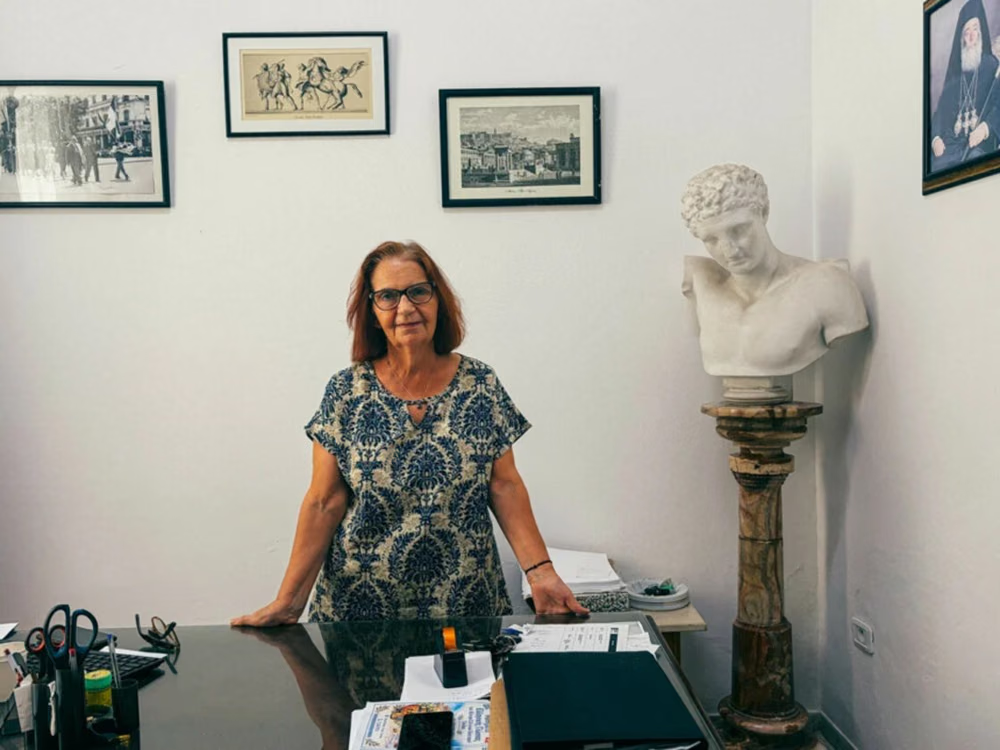
The story of Konstantina Rizou is characteristic; she comes from Krya Vrysi near Kalambaka and has lived in Tunisia since 1979. As she recalls, when she settled in the country there were many more Greeks and two communities were active, in Tunis and in Sfax. Today only the one in the capital remains, with members of the first, second and even fifth generation.
Despite the demographic decline, the Greek language can still be heard in the community’s premises. At the school next to Saint George a Greek teacher appointed by the Ministry of Education teaches, maintaining one more living bond between the younger generations and Greece.
From the sponge divers and merchants of past centuries to the few families who remain today, the Greek presence in Tunisia has shrunk in numbers, but not in history. The fewer than 100 Greeks of the country continue a journey of almost four centuries, centred on Saint George and on a community that still speaks, celebrates and teaches Greek.