The Losses of Heroic Greece in 1940 and the statements of foreign leaders
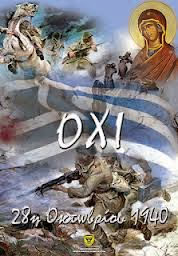
The losses of heroic Greece during the Greek-Italian and Greek-German War and the statements of foreign leaders.
It should be noted that Greece is the only country that was forced to face the armies of four countries at the same time, Albania, Italy, Germany and Bulgaria.
DAYS OF RESISTANCE
Greece: 219
Norway: 61
France: 43 (The superpower of the era)
Poland: 30
Belgium: 18
Netherlands: 4
Yugoslavia: 3
Denmark: 0 days. (The Danes surrendered to one of Hitler’s motorcyclists, who brought the Danish king Hitler’s request for the passage of the Nazi troops; the Danish king, as a sign of submission, handed his crown to the motorcyclist to take it to Berlin and to Hitler…!!!)
Czechoslovakia: 0
Luxembourg: 0
HUMAN LOSSES
The Greek soldiers killed during the 219 days numbered 13,676.
During the four-year occupation that followed, the occupying forces executed:
Albanians: 1,165 (Parga, Margariti, Paramythia)
Italians: 8,000
Bulgarians: 25,000
Germans: 50,000
Total losses as a percentage of the population (executions, hardships, battles)
Greece 10% (750,000)
Soviet Union 2.8%
Netherlands 2.2%
France 2%
Poland 1.8%
Yugoslavia 1.7%
Belgium 1.5%
STATEMENTS OF THE PROTAGONISTS (Source: Anthology of Knowledge of the Homeland, Menelaos Pagoulatos)
Charles de Gaulle 1890-1970
President of the French Republic 1958-1969, leader of the French Resistance during the Second World War.
"I am unable to give the proper measure of the gratitude I feel for the heroic resistance of the people and the leaders of Greece."
(From a speech to the French Parliament after the end of the Second World War.)
Maurice Schumann 1911-1992
Minister of Foreign Affairs of France 1969-1973, Member of the Académie française 1974
"Greece is the symbol of martyred, enslaved, bloodied, but living Europe… Never has a defeat been so honourable for those who suffered it."
(From a message he addressed over the BBC in London to the enslaved peoples of Europe on 28 April 1941, the day Hitler occupied Athens after a war of 6 months against Mussolini and six weeks against Hitler.)
Stalin, Joseph Vissarionovich Dzhugashvili Stalin 1879-1953
Leader of the Soviet Union from 1924 to 1953
"I regret that I am growing old and will not live long enough to show my gratitude to the Greek people, whose resistance decided the Second World War."
(From a speech broadcast by Radio Moscow on 31 January 1943 after the victory at Stalingrad and the capitulation of Field Marshal Paulus.)
Moscow, Radio Station
"You fought unarmed and won, small against great. We owe you gratitude, because we gained time to defend ourselves. As Russians and as human beings we thank you."
(When Hitler attacked the USSR.)
Georgy Zhukov, Georgy Konstantinovich Zhukov 1896-1974
Marshal of the Soviet Army
"If the Russian people managed to put up resistance before the gates of Moscow, to hold back and overturn the German torrent, they owe it to the Greek people, who delayed the German divisions all the time in which they could have brought us to our knees. The titanic battle of Crete was the culmination of the Greek contribution."
(Excerpt from his memoirs of the Second World War.)
Benito Mussolini 1833-1945
Prime Minister of Italy 1922-1945
"The war with Greece has proved that nothing is unshakeable in military affairs and that surprises always await us." (From a speech delivered on 10/5/1941.)
Adolf Hitler 1889-1945
Head of the German state 1889-1945
"For the sake of historical truth I must state that only the Greeks, of all the adversaries who have confronted me, fought with reckless courage and the utmost contempt for death…." (From a speech delivered to the Reichstag on 4 May 1941.)
Sir Anthony Eden, Sir Robert Anthony Eden 1897-1977
Secretary of State for War and Foreign Secretary of Britain 1940-1945, Prime Minister of Britain 1955-1957
"Regardless of what the historians of the future will say, what we can say now is that Greece gave Mussolini an unforgettable lesson, that she was the cause of the revolution in Yugoslavia, that she held the Germans on the mainland and in Crete for six weeks, that she upset the chronological order of all the plans of the German General Staff and thus brought about a general change in the whole course of the war, and we won."
(From his speech to the British Parliament on 24/09/1942.)
Churchill, Winston Churchill 1874-1965
Prime Minister of Great Britain during the Second World War
"I fear that the word heroism does not convey in the least those acts of self-sacrifice of the Greeks, which were a decisive factor in the victorious outcome of the common struggle of the nations, during the Second World War, for human freedom and dignity."
"Were it not for the valour of the Greeks and their courage, the outcome of the Second World War would have been undetermined."
(From a speech to the English Parliament on 24 April 1941.)
"Until now we used to say that the Greeks fight like heroes. Now we shall say: heroes fight like Greeks." (From a speech he delivered over the BBC in the first days of the Greek-Italian war.)
"Fighting against the common enemy, the Greeks will share with us the blessings of peace."
(From a speech delivered on 28 October 1940, when Italy attacked Greece.)
Sir Harold Alexander, Sir Harold Rupert Leofric George Alexander 1891-1969
British Field Marshal during the Second World War
"It would not be an exaggeration to say that Greece upset the whole of Germany’s plans, forcing her to postpone the attack on Russia for six weeks. We wonder what the position of the Soviet Union would have been without Greece."
(From his speech to the British Parliament on 28 October 1941.)
George VI (1898-1952)
King of Great Britain 1936-1952
"The magnificent struggle of Greece was the first great turning point of the Second World War."
(From his speech to Parliament in May 1945.)
Franklin Roosevelt 1882-1945
President of the United States of America 1932-1945
"On 28 October 1940 Greece was given three hours to decide on war or peace, but even if a deadline of three days or three weeks or even three years had been given, the answer would have been the same."
"The Greeks have taught dignity throughout the centuries. When the whole world had lost all hope, the Greek people dared to challenge the invincibility of the German monster, opposing it with the proud spirit of freedom." (From a radio address delivered on 10/6/1943.)
"The heroic struggle of the Greek people… against the attack of Germany, after they had so resoundingly defeated the Italians in their attempt to invade Greek soil, has filled the hearts of the American people with enthusiasm and stirred their sympathy. More than a century ago, during the Greek War of Independence, our nation… expressed its ardent sympathy for the Greeks and hoped for Greek victory…"
(His statement to the Supreme Lodge of AHEPA on 25/04/1941, broadcast on radio from the White House.)
OBSERVATIONS:
10 April 1941: after the capitulation to Germany, the Paliouriotes and Rupel forts are surrendered. The Germans express their admiration to the Greek soldiers, declare that it is an honour and a source of pride to have had such an army as their opponent, and ask the Greek commander to inspect the German army as a sign of honour and recognition! The German flag is raised only after the complete withdrawal of the Greek army.
A German air force officer told the commander of the Eastern Macedonia Army Section, Lieutenant General Dedes, that the Greek Army was the first army in which the Stukas did not cause panic. “Your soldiers”, he said, “instead of fleeing in a frenzy, as they did in France and Poland, fire at us from their positions.”
Source: ELLINIKI AGOGI, April 2003 issue
28/10/2016