A Loud Wake-Up Call: Europe’s Agricultural Trade Surplus Down 53.9%
The think tank Farm Europe warns of an accelerating erosion of the EU’s productive base as crops and livestock farming decline, while dependence on imported animal feed is increasing.
The latest figures from Farm Europe, the EU think tank, record a heavy blow to the productive and commercial strength of European agriculture, as the European Union’s surplus in trade in plant products has shrunk by 53.9%, while real agricultural income fell by 8.3% in just five years. At the same time, the number of farms continues to decline and Europe is importing ever more animal feed to support its livestock production.
The picture emerging from the updated edition of the Radar on the sustainability and sovereignty of EU food systems is that of a Europe that remains a major agricultural power, but is seeing its traditional productive advantages shrink rapidly. Farm Europe’s key message is clear: the trade surpluses that for decades were a hallmark of European agriculture are no longer growing – they are shrinking.
Crop surplus down 53.9%
According to Farm Europe’s data, the EU-27 trade surplus in plant products fell by 53.9% in the period 2023-2025, compared with the average for the period 2020-2022.
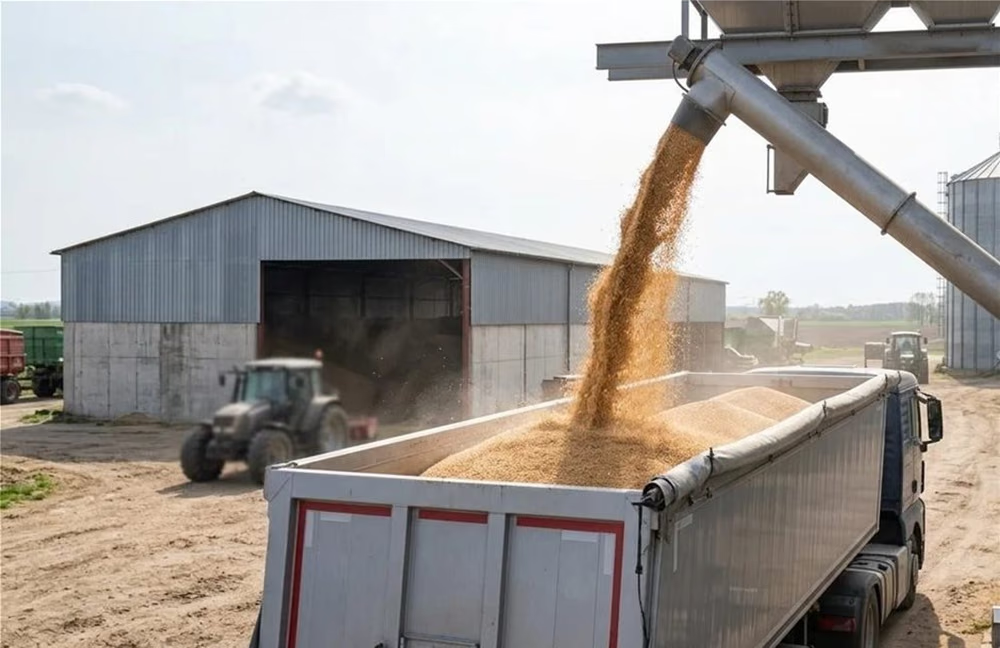
A decisive role in this development is played by the significant drop in cereal exports, which is reducing the footprint of European agriculture on international markets. The picture is similar in livestock farming. The trade balance in animal products fell by 28.2%, mainly owing to reduced surpluses in meat.
At the same time, the EU’s deficit in trade in animal feed widened by 11%. This development reflects a critical contradiction: Europe is exporting less than it produces, while at the same time increasing its dependence on imports to cover the needs of livestock farming.
Real agricultural income down 8.3%
The decline in productive strength is accompanied by a deterioration of socio-economic conditions in the farm sector. Real agricultural income fell by 8.3% between 2019 and 2024, while the number of farms fell by 11.7% between 2016 and 2020 alone.
This is the continuation of a long-term trend of abandoning farming activity. Since 2005, the number of farms in the EU has fallen by more than a third.
At the same time, agricultural debt is rising while incomes are falling. Farm Europe considers that this development shows that producers are being forced to resort more to borrowing in order to remain active or to meet regulatory requirements not directly linked to production.
Conversely, the capacity to invest in production, in the creation of added value and in the development of new sources of income is diminishing.
The environmental picture: positive indicators, but a loss of pastureland
Environmental performance presents a different picture. Greenhouse gas emissions fell by 3.2%, while sales of the most hazardous active substances in plant protection products fell by 9.7%.
However, Farm Europe warns that this development cannot be attributed solely to improved efficiency, as it may also be linked to the shrinking of an economically pressured farm sector.
Of particular concern, according to the think tank, is the accelerating decline of livestock farming and the loss of permanent pastureland. Since 2009 permanent pastureland has decreased by 8.4%, which limits one of the most important natural carbon sequestration mechanisms available to agriculture.
Rise in biogas and biomaterials
In the bioeconomy, the picture is more positive, but not without problems. Trade in biomaterials increased by 66%, while biogas production grew by 11.1%.
However, Europe still shows a very high dependence on imports in the bioenergy sector. Farm Europe argues that this segment of the market remains essentially stagnant because of the European regulatory framework.
It also points to the presence of illegal imports of advanced biofuels, a trend that, according to its analysis, is reflected in the data of recent years.
The challenge of a productive restart
For Farm Europe, these developments are not isolated phenomena. They reflect the pressure exerted by geopolitical instability, climate variability, structural changes in European agriculture and the cumulative effects of the EU’s recent policy choices.
The think tank now considers the need to reverse the decline in Europe’s productive capacity to be urgent.
In this context, it renews its proposal for a substantial recovery plan for European agriculture, with adequate budgetary resources and with the alignment of all European policies affecting agriculture around a common goal: the sustainable restart of production.
What is at stake, according to Farm Europe, is to halt the current trend before the historic advantages of European agriculture turn into permanent weaknesses.